

How to Measure Your Dog for a Harness
Table of Contents
- Why Measuring Your Dog for a Harness Matters
- Tools You'll Need to Measure Your Dog
- How to Measure Your Dog for a Harness: Step-by-Step
- How to Check If a Dog Harness Fits
- Signs a Dog Harness Is Too Small
- Adjusting Dog Harness Straps for the Perfect Fit
- Common Mistakes When Measuring
- Breed-Specific Measuring Tips for Australian Dog Gear
- Frequently Asked Questions
Last Updated: September 25, 2026
Why Measuring Your Dog for a Harness Matters
A harness that doesn't fit properly can slip off, rub raw spots, or fail to provide control when your dog pulls hard, especially for working dogs, large breeds, and active dogs in tough conditions.
When you measure dog for harness, you ensure a snug fit that prevents escape while allowing full range of motion, and it's the first step to choosing the right piece of Australian dog gear for your dog's build. At Red Dirt Dogs, we've seen countless owners buy harnesses that didn't fit because they skipped this step. A proper fit keeps your dog secure, comfortable, and ready for adventure.
Tools You'll Need to Measure Your Dog
You need only a soft tape measure, avoid rigid rulers or hard tape measures, which won't conform to your dog's body and give inaccurate readings.
Here's what works best:
- Soft measuring tape (the kind used for sewing), flexible and accurate, it curves around your dog's body naturally without compression.
- Pen and paper, to record measurements immediately; even a 1-2 cm error changes the harness size.
- High-value treats, to keep your dog calm and cooperative.
- A helper, to hold your dog steady, especially for dogs that shift weight or move constantly.
Measuring a Squirmy or Anxious Dog
If your dog is fidgety, try these techniques: measure during calm moments (after a walk or play session), use a helper to steady them, break measurements into multiple short sessions, reward between measurements, measure on a non-slip surface, and avoid high-energy times.
How to Measure Your Dog for a Harness: Step-by-Step
Measuring takes about five minutes. Keep your dog calm and standing still in a natural position.
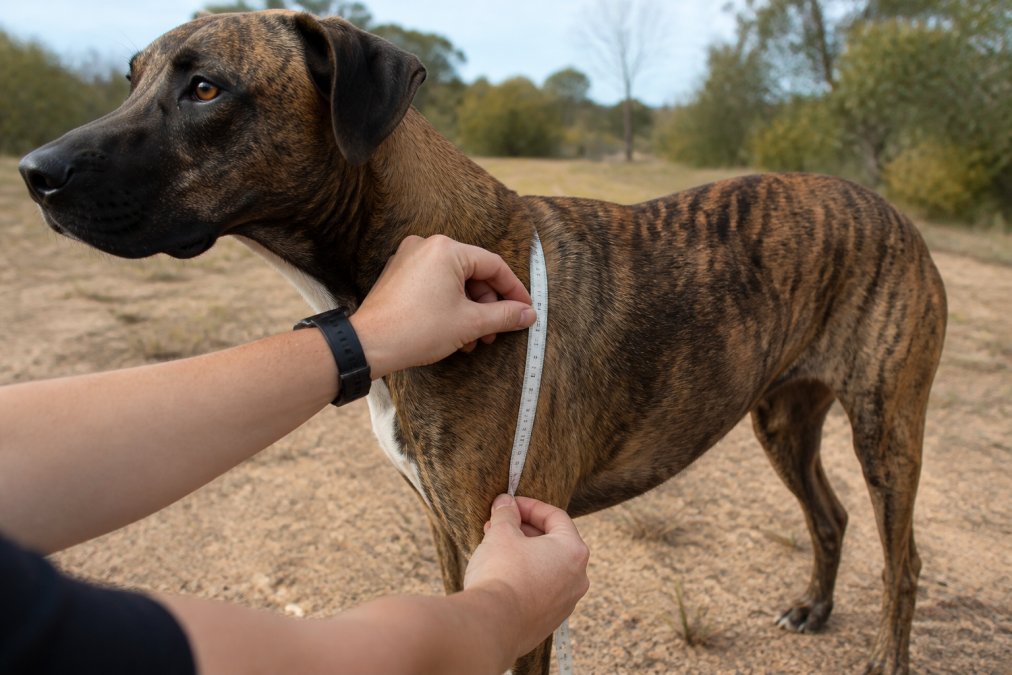
Step 1: Measure Chest Circumference
To measure dog for harness accurately, chest circumference is the most critical measurement. Wrap the soft tape measure around the widest part of the chest, just behind the front legs. The tape should be snug but not tight, you should fit one finger under it comfortably. Most harness fit problems trace back to an incorrect chest measurement.
Step 2: Measure Neck Circumference
Place the tape measure around the base of your dog's neck where a collar would sit. Keep it loose enough to slide two fingers underneath comfortably. Dogs with thicker necks relative to head size (like Greyhounds and Whippets) need extra attention, a loose neck measurement can cause the harness to slide forward during walks.
Step 3: Measure Back Length
Measure from the base of your dog's neck down to just above the hip, running the tape along their spine. This measurement varies more between breeds than chest and neck measurements. Getting it right prevents the harness from riding up or sagging down during movement.
Step 4: Record Your Measurements
Write down all three measurements clearly:
| Measurement | Your Dog's Size (cm) |
|---|---|
| Chest Circumference | ___ |
| Neck Circumference | ___ |
| Back Length | ___ |
Keep these numbers handy. When you're shopping for a harness, compare your dog's measurements against the sizing chart provided by the manufacturer. Most harness brands publish detailed size guides that match measurements to specific sizes.
How to Check If a Dog Harness Fits
Once you've ordered a harness, test the fit before your first walk. A properly fitting harness should feel snug without being restrictive.
The Two-Finger Rule
Put the harness on your dog and fasten all straps. Run your fingers under each strap, you should fit two fingers comfortably under the neck strap, chest strap, and any belly straps. If you can fit more than two fingers, it's too loose. If you can't fit two fingers, it's too tight.
Visual Fit Check: What to Look For
Beyond the two-finger test, a properly fitted harness has specific visual markers:
Correct fit:
- The chest strap sits directly behind the front legs
- The neck strap rests at the base of the neck
- The harness lies flat with no twisting, bunching, or gaps
- No visible red marks or indentation after 15-20 minutes of wear
Too loose (common signs):
- You can fit three or more fingers under any strap
- The harness shifts or rotates when your dog moves
- Visible gaps between straps and body
- Your dog can slip a paw or head partially out
Too tight (common signs):
- You cannot fit two fingers under any strap
- Visible indentation or compression in fur that doesn't fade within 30 minutes
- Red marks, chafing, or raw spots
- Your dog moves stiffly or shows signs of discomfort
Movement and Behaviour Test
Watch your dog move for at least 5 minutes. They should walk, trot, and turn without the harness shifting. Observe walking straight, turning, sitting, and climbing stairs. If the harness shifts during any movement, it's too loose and needs tightening or sizing down.
Pressure Mark Assessment
After 15-20 minutes of wear, remove the harness and inspect your dog's skin and fur:
- Redness that fades within 30 minutes is normal and indicates the harness was in contact with the skin
- Redness that persists after 30 minutes suggests the harness is too tight
- Raw spots, hair loss, or visible chafing means the harness is causing injury and must be removed immediately
- Indentation or compression marks in the fur that don't spring back within a few minutes indicate excessive pressure
If you see any signs of chafing or persistent redness, the harness is too tight. Stop using it and order a larger size or adjust the straps to be looser.
For help spotting rubbing early and adjusting strap placement, read our guide to stopping dog harness chafing.
Signs a Dog Harness Is Too Small
A harness that's too small restricts movement and can cause serious discomfort. Watch for these warning signs:
- Difficulty moving, your dog moves stiffly or reluctantly when wearing the harness
- Panting or heavy breathing, the harness is pressing on the chest and restricting breathing
- Visible red marks or chafing, the straps are too tight and rubbing raw spots
- Reluctance to wear it, your dog tries to escape or acts anxious when you bring out the harness
- Pulling or tugging, your dog constantly tries to slip out or adjust the fit
If you see any of these signs, the harness is too small.
Adjusting Dog Harness Straps for the Perfect Fit
Most modern harnesses have adjustable straps that let you fine-tune the fit. Proper adjustment can transform a mediocre fit into a secure, comfortable one.
Common Mistakes When Measuring
Measuring too tight. Some owners measure as if the tape is a binding strap, pulling it snug against the body. This gives you a measurement that's 2-3 centimetres smaller than it should be. The tape should rest lightly against your dog's fur, not compress it.
Breed-Specific Measuring Tips for Australian Dog Gear
Different breeds have different body shapes, and this affects how harnesses fit. Understanding your dog's build helps you choose a harness that works for their specific shape. If you're kitting out a working or outdoor dog, our heavy duty tactical dog harness guide breaks down which build suits which breed and job.
Frequently Asked Questions
What measurements are needed to measure your dog for a harness?
You need three key measurements: chest circumference (around the widest part of the chest just behind the front legs), neck circumference (around the base of the neck where the harness sits), and back length (from the base of the neck to just above the tail). Use a soft measuring tape and allow 2-3 cm of extra room for comfort. These measurements ensure your dog has proper range of motion and the harness won't chafe or slip during walks and training.
How do I know if a dog harness fits correctly?
A properly fitting harness should allow you to fit two fingers snugly between the harness and your dog's body. Check that the harness sits comfortably without rubbing the armpits, shoulders, or rib cage. Your dog should be able to move freely without restriction, and the harness shouldn't slip when you gently tug it. Watch for signs of discomfort like excessive scratching, reluctance to move, or chafing marks after wear.
What should I do if my dog is between harness sizes?
If your measurements fall between two sizes, choose the larger size. A slightly loose harness can be adjusted with straps and still fit safely, whereas a harness that's too small restricts movement and causes discomfort. The Red Dirt Dogs Anti-Escape Comfort Harness and Hi-Vis Harness both feature fully adjustable straps on the neck and chest, allowing you to fine-tune the fit even after sizing up.
Why is it difficult to measure a squirmy or anxious dog?
Anxious or energetic dogs often tense their muscles when you try to measure them, giving you inaccurate readings. Keep measuring sessions short and reward your dog with treats. Measure when your dog is calm and relaxed, ideally after a walk or play session. Use a helper to hold your dog steady, and practice the motions a few times without the tape measure first so your dog gets used to the sensation.
Measuring your dog for a harness is the foundation of comfortable, secure gear. Get this step right, and you'll find harnesses that fit properly, keep your dog safe during walks and adventures, and last through years of use. If you're planning to mount a GPS or Bluetooth tracker once the harness is on, check our guide to Bluetooth trackers and casing for dogs for the best mounting method. Red Dirt Dogs harnesses come with detailed sizing guides and a 30-day fit guarantee, if the size isn't right, we'll exchange it for free. Kitting out a working dog? Explore the RDD Tactical Dog Harness, built for MOLLE gear and rough conditions. Measure carefully, follow the two-finger rule, and your dog will be ready for whatever comes next.
Getting the measurements right is the difference between a harness that works and a piece of Australian dog gear that ends up in a drawer. Take the five minutes now, and every walk after that will be easier for both of you.