

Xylitol and Dogs: Hidden Dangers in Everyday Products
Table of Contents
- What Is Xylitol and Why Is It in So Many Products?
- Why Xylitol Is Dangerous for Dogs
- Common Household Products Containing Xylitol
- Xylitol Poisoning Symptoms in Dogs
- Emergency Vet Treatment for Xylitol Ingestion
- How Much Xylitol Is Toxic? Understanding the Dose
- Spotting Xylitol on Labels: Alternative Names to Know
- Safe Alternatives and Recovery Care
- Frequently Asked Questions
Last Updated: September 19, 2026
What Is Xylitol and Why Is It in So Many Products?
Xylitol is a sugar alcohol (a polyol) used as a sweetener in sugar-free gum, lollies, baked goods, and dental products. It tastes like sugar but carries fewer kilojoules, so manufacturers lean on it heavily in "sugar-free" ranges.
The Chemistry Behind the Danger
Dogs metabolise xylitol differently to humans. In people it absorbs slowly with minimal effect on blood glucose; in dogs it triggers a rapid, exaggerated insulin release from the pancreas, turning a sweetener into an emergency.
Why Xylitol Is Dangerous for Dogs
Xylitol is dangerous for dogs because it causes a fast, severe drop in blood glucose (hypoglycemia), and in higher doses destroys liver tissue. There is no safe treat-sized amount to experiment with.
Two separate problems unfold, sometimes at once:
- Acute hypoglycemia develops within 30 to 60 minutes of ingestion as the pancreas dumps insulin into the bloodstream.
- Hepatic necrosis (liver cell death) can follow within 24 to 72 hours, even after blood sugar has been stabilised.
How Xylitol Affects Blood Sugar in Dogs
The pancreas mistakes xylitol for real sugar and releases insulin accordingly, crashing blood glucose. A dog bouncing around the yard twenty minutes earlier can be weak, wobbly, and unable to stand. Timing matters: symptoms appear fast and escalate quickly.
Liver Failure and Long-Term Damage
Liver injury from xylitol is not slow or cumulative, it can be acute and severe. Veterinary teams monitor liver enzymes for days after a known ingestion because hepatic necrosis may not show on the first blood panel. Prognosis depends on dose, how quickly the dog was seen, and how aggressively treatment started.
Common Household Products Containing Xylitol
Xylitol hides in far more than gum. The most common household sources are sugar-free chewing gum, mints, peanut butter, baked goods, cough syrup, toothpaste, and some vitamin gummies.
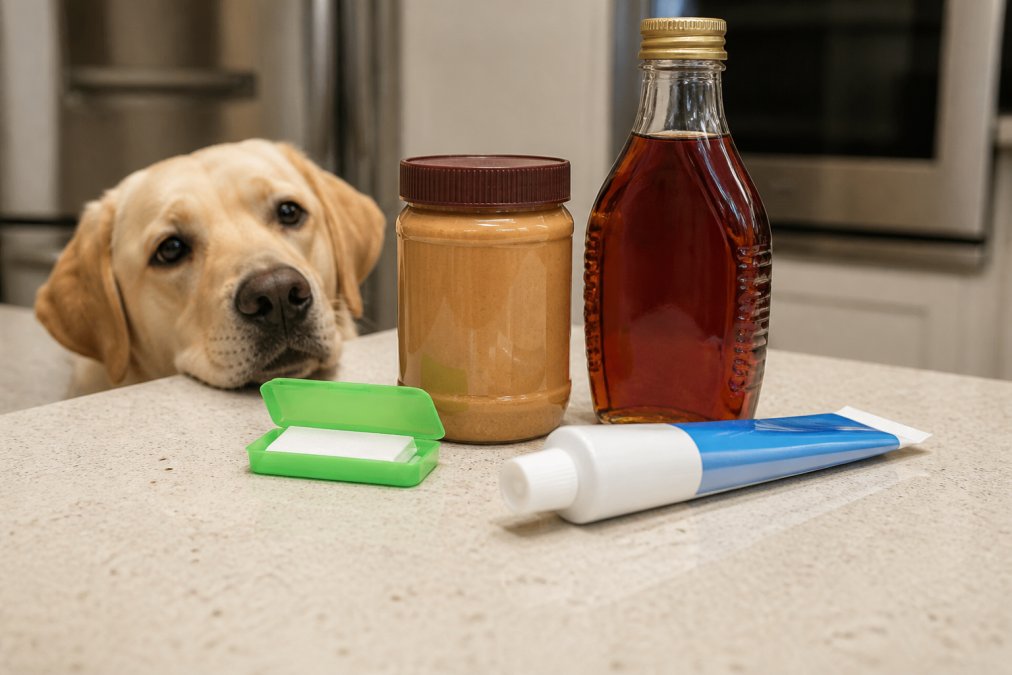
Food and Pantry Items
- Sugar-free chewing gum and mints
- Peanut butter and other nut spreads, especially "no added sugar" varieties
- Sugar-free lollies and chocolate
- Baked goods marketed as diabetic-friendly or low-carb
- Sugar-free jams, sauces, and syrups
- Some protein bars and meal replacement shakes
Personal Care and Medications
- Toothpaste and mouthwash
- Sugar-free cough syrup and throat lozenges
- Chewable vitamins and supplements
- Some nicotine replacement gums
- Certain prescription liquid medications
The dose per item varies enormously: one piece of gum is a small exposure, a jar of peanut butter a different conversation entirely.
Xylitol Poisoning Symptoms in Dogs
Symptoms of xylitol poisoning in dogs usually appear within 30 to 60 minutes and progress from wobbliness to collapse. Early recognition is the difference between a vet visit and a crisis.
Watch for:
- Vomiting
- Weakness or lethargy
- Loss of coordination (ataxia)
- Trembling or shaking
- Collapse
- Seizures
- Yellowing of the gums, skin, or eyes (jaundice) in later stages
Emergency Vet Treatment for Xylitol Ingestion
Emergency vet treatment for xylitol ingestion focuses on two goals: restoring blood glucose and protecting the liver. Call your vet or a pet poison helpline first. Decontamination may be attempted if the dog was seen within a short window and is stable, inducing vomiting under veterinary direction, never at home on your own initiative.
Once at the clinic, treatment usually involves:
- Intravenous fluids to support circulation
- Dextrose supplementation to correct hypoglycemia
- Repeated blood glucose monitoring over 12 to 24 hours
- Blood tests to track liver enzymes
- Liver protectants and supportive care in severe cases
What to Do Before You Reach the Vet
- Remove your dog from the source immediately.
- Note what was eaten, roughly how much, and when.
- Keep the packaging. The vet needs the ingredient list and concentration.
- Call your vet or an animal poisons service for guidance.
- Do not induce vomiting unless a vet tells you to.
- Bring the dog in, even if they seem fine.
The packaging matters more than you'd think. "Sugar-free gum" tells a vet almost nothing. The specific product and its xylitol concentration tell them whether this is a monitoring case or an emergency.
How Much Xylitol Is Toxic? Understanding the Dose
There is no universally safe dose of xylitol for dogs, and individual sensitivity varies. What follows is the rough framework veterinary toxicologists use to triage exposures, not a substitute for a vet call, but a way to understand why one ingestion is a monitoring case and another is an emergency.
The Two Thresholds That Matter
Veterinary toxicology generally works with two rough dose bands, expressed in grams of xylitol per kilogram of body weight:
- Around 0.1 g/kg, the low end at which hypoglycemia (dangerous blood sugar drop) becomes a concern (Xylitol toxicity in dogs).
- Around 0.5 g/kg, the level at which liver injury (hepatic necrosis) becomes a realistic risk.
A Worked Example
Say a 10 kg dog eats a single piece of sugar-free gum containing roughly 1 g of xylitol.
-
Dose = 1 g ÷ 10 kg = 0.1 g/kg
-
That sits right at the hypoglycemia threshold.
-
Dose = 10 g ÷ 10 kg = 1.0 g/kg
-
That is well above the liver-injury threshold and is a genuine emergency.
Why You Should Not Try to Calculate It Yourself in a Crisis
Product labels rarely state the exact xylitol concentration. A "sugar-free" claim tells you nothing about how much is in there. Gum brands vary enormously; some contain almost none, others pack a full gram per piece. Peanut butters and baked goods vary even more.
| What You Know | Action |
|---|---|
| Ate any amount of a xylitol product | Call your vet now |
| Packaging lists xylitol or birch sugar | Treat as toxic exposure |
| Unsure of the amount eaten | Treat as toxic exposure |
| Dog is already wobbly or vomiting | Emergency vet, immediately |
| Dog seems normal, ate 30+ minutes ago | Still call, still go in |
What to Tell the Vet
When you call, have these ready:
- Your dog's approximate weight.
- The product name and, if possible, the xylitol concentration from the label.
- How much you think was eaten, even a rough estimate helps.
- How long ago it happened.
That lets the vet decide whether this is a home-monitoring case, an induce-vomiting case, or a hospitalisation. Without it, they must assume the worst.
Spotting Xylitol on Labels: Alternative Names to Know
Xylitol hides behind several label names, and most owners only learn them after a scare. Knowing the alternative names is the single most useful thing you can do before an incident.
Check for any of these on an ingredient panel:
- Xylitol
- Birch sugar
- Birch bark extract
- Wood sugar
- Xylite
- E967 (the food additive code)
Safe Alternatives and Recovery Care
Most guides stop at the vet visit. But a dog who survives the initial hypoglycemic crash still faces a 24 to 72 hour window where liver injury can surface. Here's what happens after the emergency, and what to reach for instead.
What Recovery Actually Looks Like
A dog treated for xylitol toxicosis is usually not "out of the woods" when it leaves the clinic. A common pattern is:
- Day 0-1: Hospitalisation with intravenous fluids and dextrose. Blood glucose checked repeatedly. If the dog was seen early, it may stabilise quickly and look normal.
- Day 1-3: Repeat blood work to track liver enzymes (ALT and ALP are the ones vets watch most closely). Liver damage from xylitol can be delayed, so a normal first panel does not clear the dog.
- Day 3-7: If liver enzymes stay normal, most vets begin to relax. If they are rising, further monitoring and supportive care follow.
- Week 2 onward: A final recheck is common even for dogs that looked fine throughout, just to confirm the liver has fully recovered.
At home during this window, most practitioners recommend:
- A bland, low-fat diet while the liver settles, plain cooked protein and rice is a common starting point.
- Rest and reduced activity, especially in the first 48 hours.
- No new treats, supplements, or table scraps until the vet clears them.
- A written note of any change in appetite, energy, or gum colour, so you can report it accurately at the recheck.
Pet-Safe Sweetener Alternatives
If you want a sweetener in something your dog might get into, the safest answer is usually none. But owners often ask what is actually safe:
- Erythritol, generally considered low-risk for dogs, though large amounts can cause stomach upset. It is not a free pass; it is simply not in the same danger category as xylitol.
- Stevia, widely regarded as safe in small amounts. Some dogs may experience mild gastrointestinal upset.
- Plain sugar (sucrose), not toxic, but not healthy either. It contributes to obesity and dental problems, so it is not a recommended swap.
- Honey and maple syrup, safe in small quantities for most dogs, but high in sugar and unsuitable for dogs with certain conditions.
Everyday Treats Without the Guesswork
For daily rewards, skip sweetened products altogether. Single-ingredient treats remove the label-decoding problem entirely, if the bag says one thing and nothing else, there is no room for a hidden sweetener.
Frequently Asked Questions
How much xylitol is considered a toxic dose for a dog?
Even small amounts can be dangerous. Symptoms of hypoglycemia can appear after a dog eats as little as 0.1 grams of xylitol per kilogram of body weight. Liver failure is associated with doses of 0.5 grams per kilogram or more. For a 10 kg dog, that is just 1 gram of xylitol, roughly the amount in a single piece of sugar-free gum. If you suspect your dog has eaten any product containing xylitol, treat it as an emergency.
What are the early signs of xylitol poisoning in dogs?
Early xylitol poisoning symptoms in dogs include vomiting, lethargy, weakness, and loss of coordination (ataxia). These can progress to seizures and collapse within 30 to 60 minutes of ingestion. Some dogs show signs as quickly as 15 minutes after eating a product containing xylitol. If you notice any of these signs, contact a vet immediately. Do not wait to see if your dog improves on its own.
What should I do immediately if my dog consumes a product containing xylitol?
Call your vet or an animal poison hotline right away. Do not induce vomiting unless a vet tells you to. Tell the vet what product was eaten, how much, and when. Keep the packaging so you can read the ingredient list. If you can get to a vet within 30 minutes, do so. Treatment for xylitol ingestion often involves intravenous fluids and dextrose supplementation to stabilise blood glucose levels.
Are there natural alternatives to xylitol that are safe for dogs?
Yes. If you want to reward your dog without risk, choose single-ingredient treats. Red Dirt Dogs offers air-dried beef liver and kangaroo jerky, both made from 100% Australian ingredients with no sweeteners or fillers. For sweeteners in your own food, avoid giving dogs anything containing xylitol, birch sugar, or other polyols. Plain cooked meat, carrots, or a piece of apple (without seeds) are safer options.
Xylitol exposure is one of the few household emergencies you can prepare for before it happens. Read every "sugar-free" label, keep gum and mints out of reach, and know your vet's after-hours number by heart. Red Dirt Dogs builds single-ingredient treats and heavy-duty gear for owners who'd rather prevent a problem than manage one. Browse the range and add to cart with free shipping on orders over $35, backed by our 30-day money-back guarantee.