

How to Clean Tactical Dog Harness: Step-by-Step
Table of Contents
- What You'll Need Before Cleaning Your Tactical Dog Harness
- Preparation and Pre-cleaning: Remove Mud and Debris
- Best Cleaning Products for Dog Harnesses
- Cleaning Metal Hardware and Removing Rust
- How to Remove Dog Smell from Harness
- How to Dry Tactical Dog Harness Properly
- Deep Cleaning MOLLE Webbing and Stain Removal
- Maintenance and Inspection: Keep Your Harness Working
- Frequently Asked Questions
Last Updated: September 14, 2026
What You'll Need Before Cleaning Your Tactical Dog Harness
Gather a soft-bristle brush, white vinegar, baking soda, mild detergent, lukewarm water, and microfiber cloths. Avoid hot water, which weakens stitching and damages harness structure.
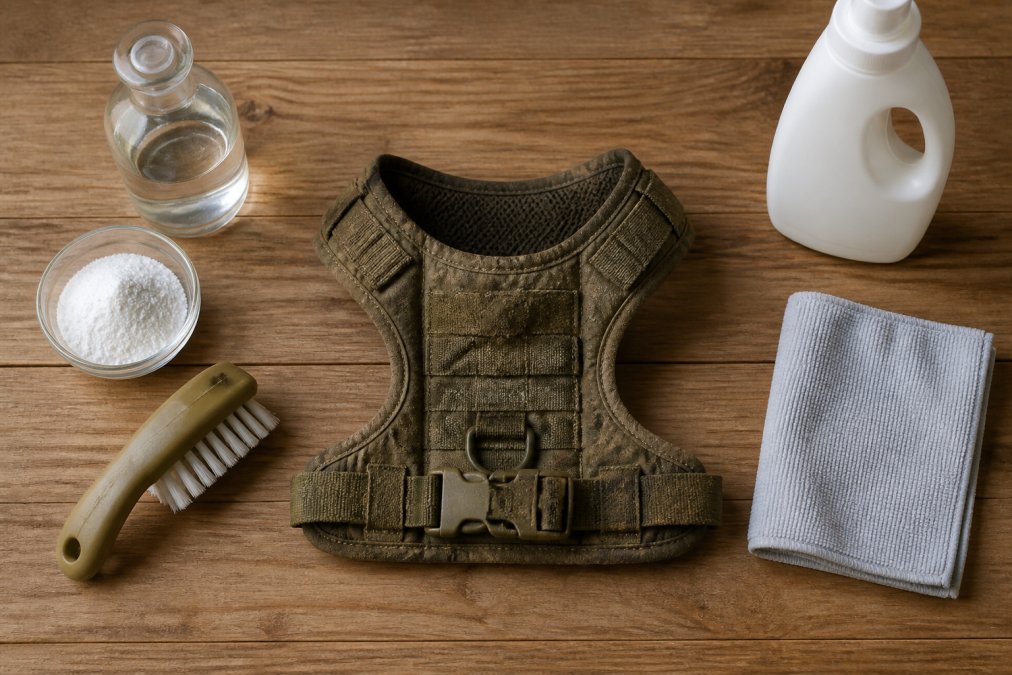
Keep light machine oil to prevent rust on D-rings and buckles. Avoid submerging velcro patches, which trap water.
Proper cleaning extends harness lifespan significantly and prevents detergent residue or water marks.
Preparation and Pre-cleaning: Remove Mud and Debris
Use a soft-bristle brush in circular motions to remove debris from nylon webbing, MOLLE webbing, and hardware attachment points.
Brush MOLLE webbing perpendicular and parallel to the weave to dislodge trapped particles. Dried mud brushes away more easily than wet mud.
Inspect for loose stitching, bent D-rings, corroded hardware, fraying nylon, and peeling velcro. Pre-cleaning inspection prevents worsening structural issues.
Shake the harness outdoors to dislodge fine particles before water is introduced, preventing sand from scratching metal components.
Best Cleaning Products for Dog Harnesses
Use mild detergent designed for delicate fabrics or pet gear. Avoid bleach, fabric softener, and enzyme-based cleaners.
Mix white vinegar and water 1:1 for soaking. Sprinkle baking soda on damp areas and let sit 15 minutes. Together they eliminate ammonia-like odours that detergent alone won't remove.
Apply baking soda paste to corroded hardware for 10 minutes, then scrub gently with a toothbrush. For heavy corrosion, use white vinegar to accelerate rust breakdown.
Test new cleaning products on a small, inconspicuous area first to prevent discolouration or residue.
Never use commercial pet shampoos on tactical harnesses; they leave film and attract dirt.
Hand Washing vs. Machine Washing
Hand wash by submerging in lukewarm water with mild detergent for 10-15 minutes. Scrub seams, MOLLE webbing, and sweat-prone areas. Rinse thoroughly until soap-free.
Machine washing is not recommended; agitation stresses stitching, tangles MOLLE webbing, and forces water into padding. Most tactical gear specifies hand washing only.
For heavily soiled harnesses, soak in lukewarm water with detergent for 20-30 minutes to loosen embedded dirt and reduce scrubbing force needed.
Use lukewarm water (30-40°C). Hot water weakens nylon and damages adhesive bonds; cold water is less effective at breaking down oils and sweat (Search For A Standard).
Cleaning Metal Hardware and Removing Rust
Metal D-rings, buckles, and attachment points corrode fastest in humid conditions (pubmed.ncbi.nlm.nih.gov). Surface rust signals corrosion is beginning.
Apply baking soda paste to rusted hardware for 10-15 minutes. Scrub gently with a toothbrush, rinse, and dry immediately.
For heavy corrosion, soak corroded hardware in vinegar for 15-20 minutes, scrub with a soft brush, rinse, and dry completely.
Apply light machine oil to D-rings, buckles, and attachment points to prevent corrosion. Wipe away excess oil.
Check hardware attachment points for loose rivets or stitching. Loose hardware should be professionally repaired before use.
| Hardware Type | Corrosion Signs | Cleaning Method | Prevention |
|---|---|---|---|
| D-rings | Orange discolouration, rough texture | Baking soda paste, gentle brush | Light machine oil after cleaning |
| Quick-release buckles | Stiff operation, rust spots | Vinegar soak, soft brush | Dry immediately after use |
| Attachment rivets | Loose movement, visible gaps | Professional repair needed | Inspect monthly |
| Stitching around hardware | Fraying, separation from metal | Hand stitch or professional repair | Avoid excess water pooling |
How to Remove Dog Smell from Harness
Dog odour comes from sweat, oils, and bacteria trapped deep in nylon and padding. Regular detergent alone won't eliminate it; use a combination approach.
Soak the harness in equal parts white vinegar and lukewarm water for 20-30 minutes. Rinse thoroughly and wring gently.
Sprinkle baking soda on damp areas, focusing on padding, seams, and underside. Let sit 15-30 minutes, then brush away gently.
For persistent smells, apply baking soda paste to problem areas and let dry completely before brushing off.
Never use fabric sprays or commercial odour eliminators; they mask smell temporarily and leave residue that attracts dirt.
Air dry in direct sunlight when possible; UV light kills bacteria and helps baking soda work more effectively.
How to Dry Tactical Dog Harness Properly
Air drying is the only safe method; heat sources damage nylon, weaken stitching, and melt velcro. Hang in a well-ventilated area away from direct heat.
Dry in a shaded outdoor area or indoors near an open window with a fan. Avoid radiators, heaters, and extended direct sunlight.
Hang by the handle or reinforced seam, positioning for air circulation around all surfaces to prevent moisture pooling and mildew.
Drying takes 24-36 hours in dry conditions with airflow, 48-72 hours in humid conditions (Keeping your pet safe during the heat). It's fully dry when nylon feels crisp and padding is no longer cool.
Wring gently before hanging; aggressive wringing stresses seams. Use a microfibre cloth to absorb additional moisture.
Never store a damp harness; trapped moisture creates mildew and permanent odours. Ensure complete dryness before storage.
Deep Cleaning MOLLE Webbing and Stain Removal
MOLLE webbing's grid pattern traps dirt and bacteria deep in the weave. Deep cleaning requires targeted effort beyond standard washing.
Submerge in lukewarm water with detergent for 20 minutes. Scrub MOLLE webbing in multiple directions to dislodge trapped particles.
For stubborn stains, apply baking soda paste for 15-20 minutes and scrub gently with a toothbrush. Repeat if needed.
For mud and grass stains, soak a cloth in vinegar, place over the stain for 10 minutes, scrub gently, and rinse. Repeat 2-3 times for set-in stains.
For blood stains, soak in cold water for 30 minutes and gently rub with a soft cloth. Hot water sets stains permanently.
Pay extra attention to the underside of MOLLE webbing where it contacts your dog's skin; brush both sides.
Rinse multiple times to remove all detergent and baking soda residue, which attracts dirt and causes discolouration.
Maintenance and Inspection: Keep Your Harness Working
Check your clean tactical dog harness monthly for signs of wear. Early detection prevents costly replacement.

Inspect stitching for loose threads and separating seams. Trim minor loose threads; have significant separation professionally repaired.
Check hardware for corrosion, loose attachment, and bent components. Clean corroded hardware immediately; have bent or damaged hardware professionally replaced.
Examine velcro patches for degradation. Replace non-sticking patches with adhesive-backed velcro from outdoor gear suppliers.
Inspect nylon webbing for tears and holes. Patch small holes; larger tears or multiple damaged areas mean the harness should be replaced.
Check padding for compression, separation, or deterioration. Damaged padding requires professional re-padding or harness replacement.
After each use in harsh conditions, rinse with fresh water and inspect. This catches problems early and extends harness life.
Monthly inspection combined with prompt cleaning after heavy use keeps your clean tactical dog harness functioning safely for years.
Cleaning your tactical dog harness properly protects your investment and keeps your dog safe and comfortable. Regular maintenance catches problems early, extends the harness lifespan, and ensures secure fit during active use. Red Dirt Dogs harnesses are engineered for durability, but they perform best with consistent care. The Anti-Escape Dog Harness and Hi-Vis Dog Harness both benefit from the cleaning protocols in this guide. Get started with a Red Dirt Dogs harness backed by a 30-day money-back guarantee and free shipping on orders over $35.

Frequently Asked Questions
Can I put a tactical dog harness in the washing machine?
Hand washing is safer for most tactical harnesses, especially those with metal hardware or MOLLE webbing. Machine washing can damage D-rings, quick-release buckles, and stitching. If your harness label permits machine washing, use a gentle cycle with lukewarm water and place it in a mesh bag. Always air dry completely, never use heat. For tactical harnesses with reinforced nylon and heavy-duty construction, hand washing with mild detergent and soft-bristle brush is the best approach.
How often should I deep clean my dog's tactical harness?
Clean your tactical harness every 2-4 weeks with regular use, or more frequently if your dog works in muddy or wet conditions. A quick rinse and air dry after each outing keeps odour and corrosion at bay. Deep cleaning with baking soda and white vinegar should happen monthly to remove stubborn stains, deodorize, and inspect for wear and tear. Dogs working in harsh Australian conditions may need more frequent maintenance to prevent rust on metal hardware and preserve structural integrity.
What's the best way to remove dog smell from a tactical harness?
Soak the harness in lukewarm water mixed with white vinegar (1 part vinegar to 3 parts water) for 30 minutes to neutralise odour. Rinse thoroughly with clean water. For stubborn smells, sprinkle baking soda directly onto damp nylon webbing, let sit for 2-3 hours, then brush away and rinse. Air dry completely in sunlight if possible, UV light naturally deodorises. Avoid commercial air fresheners, which can irritate your dog's skin and mask underlying moisture or mildew.
How do I prevent rust on the metal hardware of my tactical harness?
Dry metal hardware thoroughly after every wash and inspect regularly for early corrosion. After cleaning, lightly apply a thin coat of food-grade mineral oil or silicone spray to D-rings and quick-release buckles to create a moisture barrier. Wipe away excess with a microfiber cloth. Store the harness in a dry place away from direct moisture. If rust has started, use a soft-bristle brush with white vinegar to gently remove it, then dry and oil immediately.